
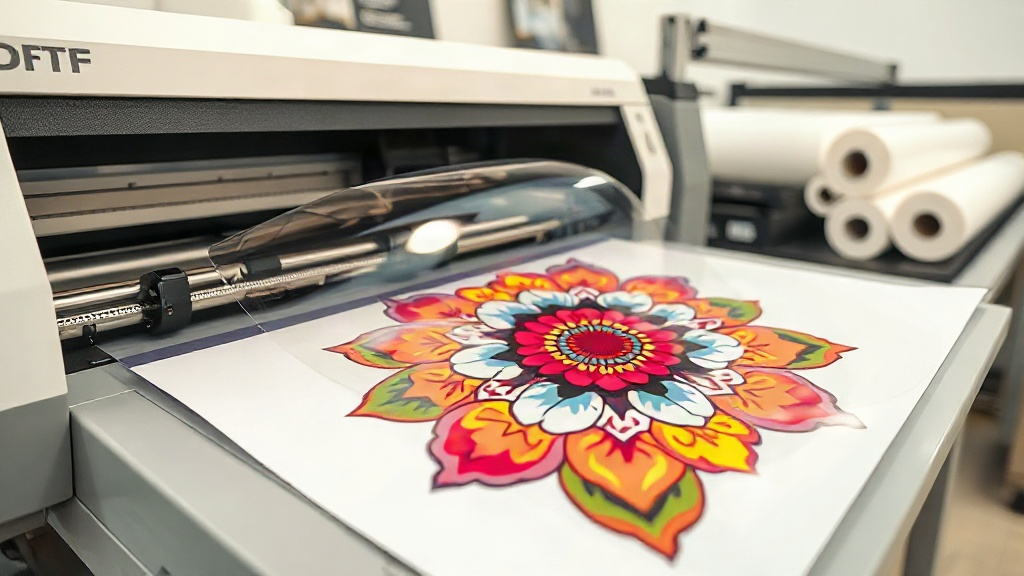
When you're running a print on demand (POD) business, the printing method you choose can make or break your product quality and profit margins. Among the many options, DTF printing has emerged as a game-changer for creators who want vibrant, durable designs on a wide range of fabrics without the hassle of cutting or weeding. If you've been sticking to the usual DTG or sublimation, it's time to explore what DTF can do for your shop.
In this guide, I'll walk you through everything you need to know about DTF printing, from how it works to the costs involved and the fabrics it works best on. I'll also share some personal tips I've picked up after using DTF for my own POD store, so you can avoid common pitfalls and start strong.
What Is DTF Printing?
DTF stands for Direct to Film. It's a printing technique where your design is printed onto a special film, coated with a adhesive powder, and then heat-pressed onto the fabric. Unlike DTG (Direct to Garment), which prints directly onto the shirt, DTF uses a transfer film as an intermediary. This might sound like an extra step, but it opens up a world of possibilities.
The magic of DTF lies in its versatility. You can print on cotton, polyester, blends, and even treated nylon. That means you're not limited to certain garment types, which is a huge advantage for POD sellers who want to offer a diverse catalog without stocking multiple printing setups.
How DTF Works: Step by Step
Let's break down the DTF process so you can see exactly what happens from digital file to finished product.
- Design Preparation: Your artwork is prepared in a graphics program, ensuring it's mirrored (unless your printer software does it automatically). Colors should be vibrant because DTF can handle intricate details and gradients well.
- Printing: A specialized DTF printer lays down a layer of white ink followed by CMYK inks onto a PET film. The white ink acts as a base, allowing the design to show up on dark fabrics.
- Powder Application: While the ink is still wet, a hot-melt adhesive powder is sprinkled over the film. The excess powder is shaken off, leaving a thin, even layer on the ink.
- Curing: The film goes through a curing oven or heat press to melt the powder, creating a dry, flexible transfer.
- Heat Pressing: The transfer is placed on the garment and pressed with a heat press at around 160°C (320°F) for 15-20 seconds. After peeling the film (hot or cold peel depending on the film type), your design is permanently bonded to the fabric.
That's it! The result is a soft, stretchable print that feels like part of the garment, not a plastic layer on top.
Why DTF Is a Game-Changer for Print on Demand
If you're running a POD business, you're likely dealing with low margins and high competition. DTF can give you an edge in several ways.
Fabric Freedom
With DTG, you're mostly limited to 100% cotton. Sublimation requires polyester or specially coated surfaces. DTF, on the other hand, adheres to almost any fabric. This means you can offer designs on tri-blends, 50/50 tees, canvas bags, and even denim. Your customers get more choices, and you don't have to turn down orders because of material constraints.
Durability That Withstands Wash After Wash
I've tested DTF prints on shirts that have gone through dozens of wash cycles. The colors stay vibrant, and the print doesn't crack or peel if applied correctly. This is crucial for POD because you want happy customers who come back for more, not ones complaining about faded designs after a few wears.
Cost-Effective for Small Batches
Traditional screen printing requires setup fees and minimum quantities, which doesn't fit the POD model of one-off orders. DTF eliminates those barriers. You can print a single transfer for a few cents, making it perfect for on-demand production. Even with the cost of film, powder, and ink, the per-unit cost is often lower than DTG for small runs.
High Detail and Color Vibrancy
DTF excels at reproducing complex designs with fine lines, gradients, and photographic elements. Unlike vinyl cutting, there's no weeding involved, so intricate patterns are a breeze. The white ink base ensures colors pop on both light and dark garments, giving you consistent results across your product line.
DTF vs. Other Printing Methods
To help you decide if DTF is right for your POD business, let's compare it to the two most common alternatives: DTG and sublimation.
DTF vs. DTG
- Fabric compatibility: DTG works best on 100% cotton; DTF works on almost anything.
- Color vibrancy: DTG can be less vibrant on dark colors unless you use a pretreatment; DTF uses a white base for consistent brightness.
- Durability: Both are durable, but DTF often outlasts DTG on blends.
- Cost: DTG printers are expensive, but DTF printers are more affordable and have lower maintenance.
- Ease of use: DTF requires a separate transfer step, but the process is straightforward once you get the hang of it.
DTF vs. Sublimation
- Fabric compatibility: Sublimation only works on polyester or polymer-coated items; DTF is far more versatile.
- Color vibrancy: Sublimation offers vibrant colors but only on light backgrounds; DTF can print white and vibrant colors on any background.
- Durability: Sublimation dyes the fabric, so it never cracks, but it fades over time; DTF sits on top but is highly durable.
- Cost: Sublimation has lower ink costs but requires specialized blanks; DTF works with standard garments.
For POD sellers who want maximum flexibility without investing in multiple systems, DTF is often the best all-rounder.
Getting Started with DTF: Equipment and Supplies
Ready to dive into DTF? Here's what you'll need to set up your production line.
DTF Printer
You can choose between converted inkjet printers and dedicated DTF printers. Dedicated models like the Epson F2100 or Roland VersaSTUDIO are popular, but they come with a higher price tag. For beginners, a converted Epson EcoTank with a DTF ink system can be a cost-effective entry point. Just make sure the printer supports white ink and has a reliable printhead.
DTF Inks and Film
Use high-quality DTF inks designed for your printer. Cheap inks can clog printheads and produce dull colors. For film, look for double-sided matte PET film that's compatible with your ink and powder. I recommend starting with a reputable brand to avoid trial-and-error.
Adhesive Powder
The powder is what makes the transfer stick. There are two main types: thermoplastic polyurethane (TPU) and polyamide. TPU is softer and more stretchable, ideal for apparel. Polyamide is more rigid and better for items like bags. Choose based on your product focus.
Heat Press
A good heat press is essential for consistent results. You'll need one with precise temperature and pressure control. A 15x15 inch clamshell press works for most garments. Don't skimp here; uneven pressure leads to poor adhesion.
Curing Oven (Optional)
While you can cure the powder with a heat press, a dedicated curing oven speeds up the process and ensures even melting. If you're scaling up, consider investing in one.
Cost Breakdown: Is DTF Profitable for POD?
Let's talk numbers. For a standard A4 size DTF transfer, your cost per print is roughly:
- Film: $0.20 - $0.40
- Ink: $0.30 - $0.50
- Powder: $0.10 - $0.20
- Labor: $0.10 - $0.20
So, about $0.70 to $1.30 per transfer. Add the cost of the blank garment (e.g., a t-shirt at $3-$5) and you're looking at a total cost of $4-$6. If you sell the shirt for $20-$25, your profit margin is healthy. Compare that to DTG, where ink costs can be higher, and you'll see why DTF is attractive for POD.
Of course, these numbers vary based on your supplier and volume. But the key takeaway is that DTF allows you to offer custom products at competitive prices while maintaining good margins.
Common DTF Pitfalls and How to Avoid Them
Even though DTF is user-friendly, there are some common mistakes that can ruin your prints. Here's what to watch out for.
Insufficient Powder Application
If you don't apply enough powder, the transfer won't adhere properly and will peel off after a few washes. Make sure the powder covers the entire wet ink area evenly. Gently shake off excess, but don't be too aggressive.
Incorrect Heat Press Settings
Temperature, pressure, and time are critical. Too low, and the powder won't melt; too high, and you'll scorch the fabric or film. Always test with a scrap piece before pressing your final product. I keep a notebook with settings for different fabrics.
Poor Curing
If the powder isn't fully melted during curing, the transfer will feel gritty and may not bond well. Invest in a curing oven or use a heat press with consistent temperature. The powder should look glossy and smooth after curing.
Storage Issues
DTF transfers can absorb moisture if not stored properly. Keep them in a cool, dry place, preferably in a sealed bag with desiccant. Moisture can cause the powder to become tacky and ruin the transfer.
Tips for Scaling Your DTF Print on Demand Business
Once you've mastered the basics, you can grow your DTF operation. Here are some strategies that have worked for me.
Automate Where Possible
Consider a conveyor dryer for curing and a heat press with a draw slide for faster production. Automation reduces labor costs and increases output.
Offer Niche Products
Don't just stick to t-shirts. DTF works on tote bags, hoodies, leggings, and even shoes. Expand your catalog to attract more customers.
Build Relationships with Suppliers
Buy your film, ink, and powder in bulk from trusted suppliers to reduce costs. I've found that sticking with one brand for ink and powder yields more consistent results.
Market Your DTF Advantage
Highlight the durability and vibrancy of your prints in your product descriptions. Customers appreciate knowing they're getting a high-quality product that will last.
Frequently Asked Questions About DTF Printing
What fabrics can I use with DTF printing?
DTF works on a wide range of fabrics, including cotton, polyester, blends, nylon, and even leather. It's one of the most versatile printing methods available.
How long do DTF prints last?
When applied correctly, DTF prints can last as long as the garment itself. They withstand repeated washing without fading, cracking, or peeling, making them ideal for everyday wear.
Can I use DTF on dark colors?
Absolutely. The white ink base in DTF printing ensures that colors remain vibrant on dark fabrics. This is a major advantage over DTG, which often requires pretreatment for dark garments.
Is DTF printing cost-effective for small orders?
Yes, DTF is very cost-effective for small batches and one-off orders because there are no minimums or setup fees. The per-unit cost is low, making it perfect for print on demand.
Do I need a special printer for DTF?
You can use a converted inkjet printer with DTF inks, or invest in a dedicated DTF printer. Dedicated printers are more expensive but offer better reliability and print quality.
With its versatility, durability, and cost-effectiveness, DTF printing is a smart choice for any print on demand business. Whether you're just starting out or looking to expand your product range, DTF can help you deliver high-quality custom products that keep customers coming back. So why not give it a try? Your customers will thank you.